ForDiL: learning to manage forests differently, closer to the field
Three years of ForDiL: looking back on the project’s achievements at the closing event
How can we better prepare forest managers to manage diverse stands in a changing climate? The European ForDiL project offers a practical answer: a free app that allows users to practise in the forest, at their own pace, through exercises in tree marking and natural regeneration management, based on the principles of Continuous Cover Forestry (CCF). Discover the project in this article, featuring videos from the closing event held on 29 May.
Preparing forest managers for tomorrow’s challenges
European forests are facing the effects of climate change and pressures linked to human activities. For forest managers, the challenge is to sustainably reconcile timber production, biodiversity conservation and the maintenance of the services provided by forest ecosystems.
Continuous Cover Forestry (CCF) offers one approach to addressing these challenges. By encouraging diverse stands and avoiding clear-cutting wherever possible, it aims to strengthen forest resilience. However, implementing it requires sound knowledge and the ability to make decisions suited to the characteristics of each stand.
Learning how to intervene in a forest made up of different tree species, trees of varying ages and numerous ecological interactions is no simple matter. Theoretical training needs to be supported by practical, hands-on experience in the field.
This is precisely the challenge addressed by ForDiL, a European Erasmus+ project running from September 2023 to August 2026.
To find out more, watch Tomas Vrška’s presentation on close-to-nature forestry and its challenges.
An app for learning independently in the forest
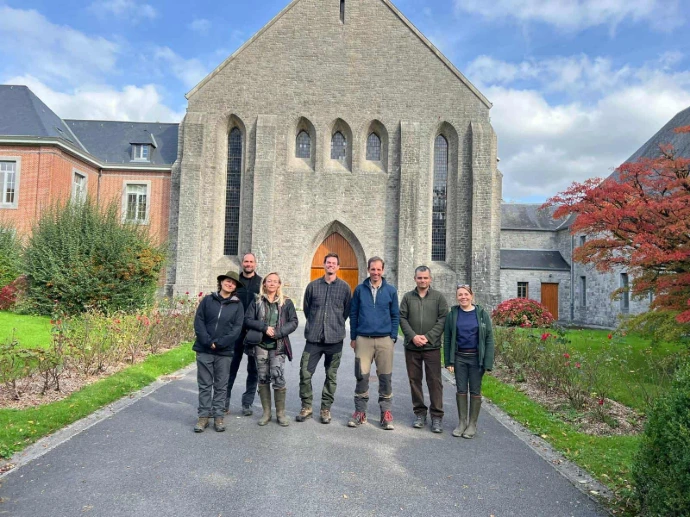
Coordinated by the Royal Belgian Forestry Society (SRFB), ForDiL brings together five partners from Belgium, France and the Czech Republic: SRFB, the Chimay Agroforestry Development Centre (CDAF), Mendel University in Brno, the vocational high school in Bavay, associated with the Institut de Genech, and the Gembloux–Suarlée Technical Institute.
Their shared goal is to develop a free, accessible digital tool that can be used directly in the field by students and trainers, as well as forest owners and managers.
The ForDiL app is based on two complementary educational tools:
- The marteloscope allows users to practise tree marking—that is, deciding which trees to retain or harvest in line with management objectives.
- The working plot (travailloscope) focuses on natural regeneration management and on decisions that encourage its development.
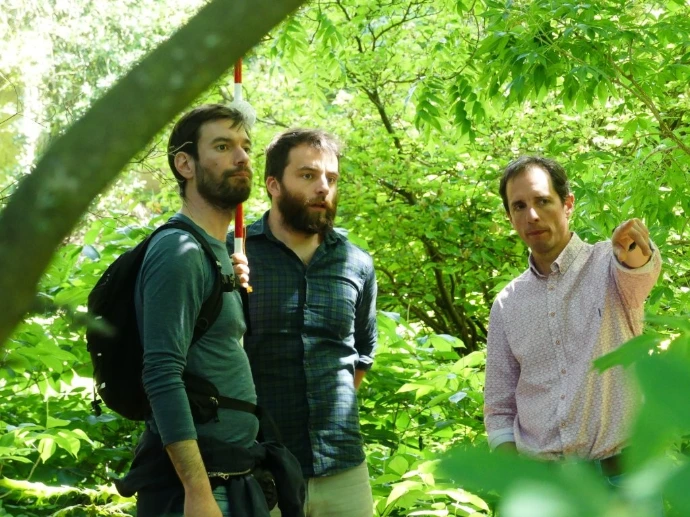
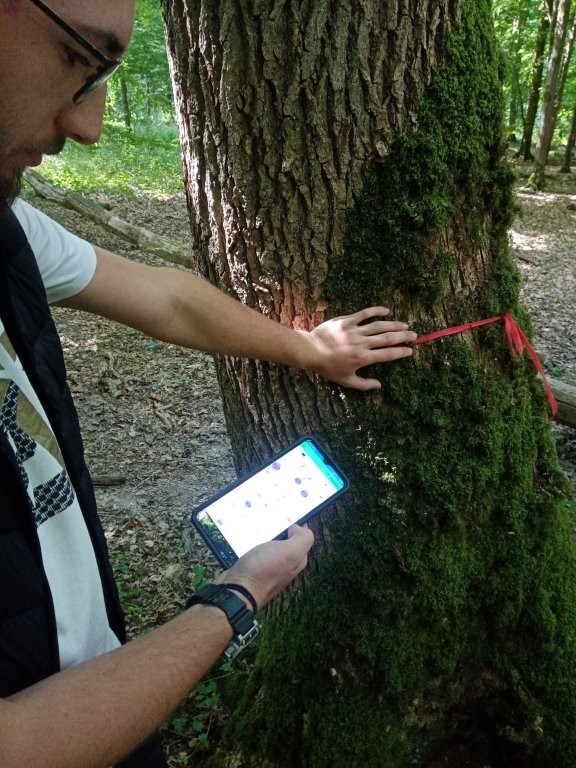
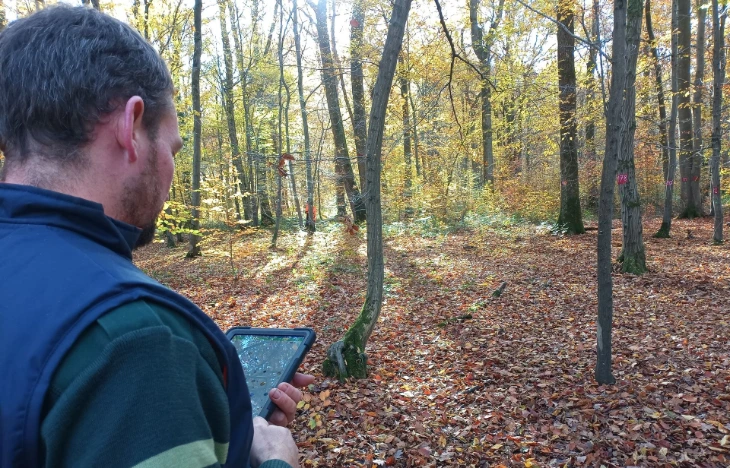
Learners can walk through a forest training site, examine the trees and make their own choices using a smartphone or tablet. They can then explore the results of their decisions through various indicators and graphs.
The app therefore does more than provide information: it encourages users to experiment, understand the consequences of their choices and improve through practice.
A tool designed for different learning levels
One of the project’s challenges was to make complex silvicultural situations accessible to a wide range of audiences, from vocational students to higher-education students, as well as experienced forest professionals.
To achieve this, ForDiL offers several levels of exploration and analysis. An introductory stage helps users become familiar with certain tree species, timber qualities and defects, and the issues affecting the stand. Tree-marking exercises can then be explored in greater depth through overall results, the analysis of specific situations—known as “hotspots”—and more advanced indicators.
Results can be compared with a reference tree-marking exercise carried out by experienced professionals. This reference is not an absolute truth; rather, it provides a benchmark for understanding one’s decisions and identifying areas for improvement.
The app thus aims to incorporate into a digital tool some of the educational support usually provided by a trainer in the field.
Discover the app in action through Grégory Timal’s (CDAF) presentation.
Three countries, field experience and a shared tool
The project’s European dimension made it possible to bring together different areas of expertise and forest contexts. Three sites were selected for the exercises: Bois de Lauzelle in Belgium, Mormal Forest in France, and a site in the Czech Republic.
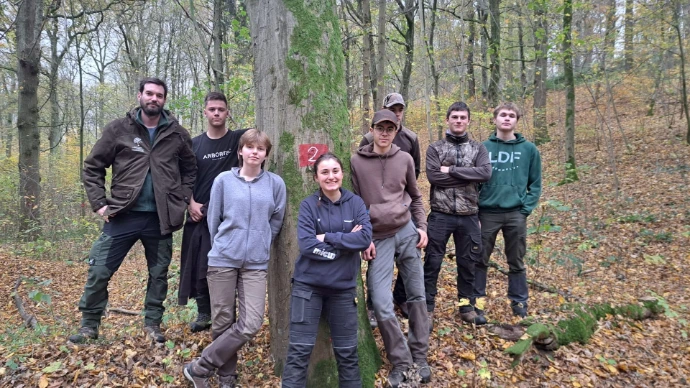
The partners jointly defined the field protocols, the silvicultural, economic and ecological indicators, and the educational principles incorporated into the app. Students also helped set up the sites and took part in successive tests of the tool.
Exchanges and mobility activities between the partner countries complemented this work. Students discovered other forest management practices, took part in field exercises and tested their theoretical knowledge in real-life situations.
Their testimonials illustrate the value of this approach: a better understanding of decisions made in the forest, greater confidence in practical work, and the acquisition of professional vocabulary, including in English.
Discover these experiences through the students’ eyes: watch their testimonials about mobility and learning.
A project that continues beyond its funding
Version 1.1 of the app was finalised in April 2026. It is available free of charge on the project website, fordil.net, and on Google Play for Android devices. App updates are also available on the website to keep the experience aligned with field conditions and technological developments.
ForDiL was also designed to make it easier to add new training sites. With a suitable data format, information about a new marteloscope can be prepared for integration into the app. This opens the way to gradually expanding the network of learning sites, although setting up a complete site still requires fieldwork and the preparation of educational data.
The tool’s long-term future will therefore also depend on its adoption by schools, training organisations and forestry stakeholders. Several partners have already announced their intention to use it in their training programmes.
The app and the training sites will also need to evolve over time. Sites dedicated to natural regeneration in particular require updates to reflect changes in the stands.
Bringing learning to life in the forest
Beyond technical development, ForDiL has an educational ambition: to make knowledge more accessible and enable people to practise in the forest without always depending on a trainer’s availability.
The closing conference also highlighted the importance of collaboration between forestry specialists, teachers, students and developers. This cooperation made it possible to turn complex silvicultural knowledge into a tool that can be used in the field.
The project is coming to an end, but its value will now be measured by its use in schools, training programmes and forests. This is where ForDiL is expected to continue its journey: in learning, silvicultural decision-making and the practices of tomorrow’s forest managers.
Want to discover the project and try the app? Find the available resources at fordil.net and watch the full set of presentations from the closing conference.